Need Education Loan.  Apply Now

Need Education Loan. Apply Now
Ireland is one of Europe’s most popular study destinations, known for its world-class education system, friendly culture, and strong career opportunities. Home to globally recognized universities and the European headquarters of major multinational companies, Ireland offers students an excellent environment for academic and professional growth.
International students benefit from high-quality education, post-study work opportunities, a safe and welcoming society, and access to the European job market. With its rich history, vibrant cities, and innovation-driven economy, Ireland provides a rewarding and memorable study abroad experience.
Dublin
5.3mn
English & Irish
40,000
€500+ Billion
+353
Euro (€)
30+
International students can apply to study in Ireland through multiple intakes each year. The September intake is the primary intake, offering the widest selection of courses, universities, and scholarship opportunities. The January intake serves as an excellent alternative for students who miss the September intake, with a range of programs available across various institutions.
Some universities may also offer limited intakes for selected courses depending on the program and institution. Students are advised to apply 6–9 months in advance to secure admission, scholarship opportunities, accommodation, and timely visa approval.

Tuition fees to study in Ireland vary depending on the university, course, and level of study. For international students, undergraduate programs generally cost between €10,000–€25,000 per year, while postgraduate programs range from €12,000–€35,000 per year. Specialized courses such as MBA, Medicine, Engineering, Data Science, and Pharmaceutical Sciences may have higher tuition fees.
Despite the investment, Irish degrees are globally recognized and highly valued by employers. Ireland’s strong academic reputation, industry-focused curriculum, and excellent post-study work opportunities make it a preferred destination for international students seeking quality education and career growth.
The cost of living for international students in Ireland varies depending on the city, type of accommodation, and personal lifestyle. Students studying in Dublin generally require a higher budget, with average monthly living expenses ranging between €1,200 and €1,800, due to higher accommodation and transportation costs. In contrast, students living in cities such as Cork, Galway, Limerick, and Waterford can typically manage their expenses within €800 to €1,300 per month.Living costs generally include accommodation, food, local transportation, utilities, health insurance, study materials, and personal expenses. Many students reduce costs by opting for shared accommodation, preparing meals at home, and taking advantage of student discounts available across Ireland.Additionally, international students are permitted to work part-time while studying, which can help support daily expenses and reduce financial pressure during their academic journey in Ireland. Overall, students should budget approximately €10,000 to €15,000 per year for living expenses while studying in Ireland.


Tuition Fees
Minimum IELPT Required
Living Cost
Ranking
Tuition Fees
Minimum IELPT Required
Living Cost
Ranking
Tuition Fees
Minimum IELPT Required
Living Cost
Ranking
Tuition Fees
Minimum IELPT Required
Living Cost
Ranking
Tuition Fees
Minimum IELPT Required
Living Cost
Ranking
Tuition Fees
Minimum IELPT Required
Living Cost
Ranking
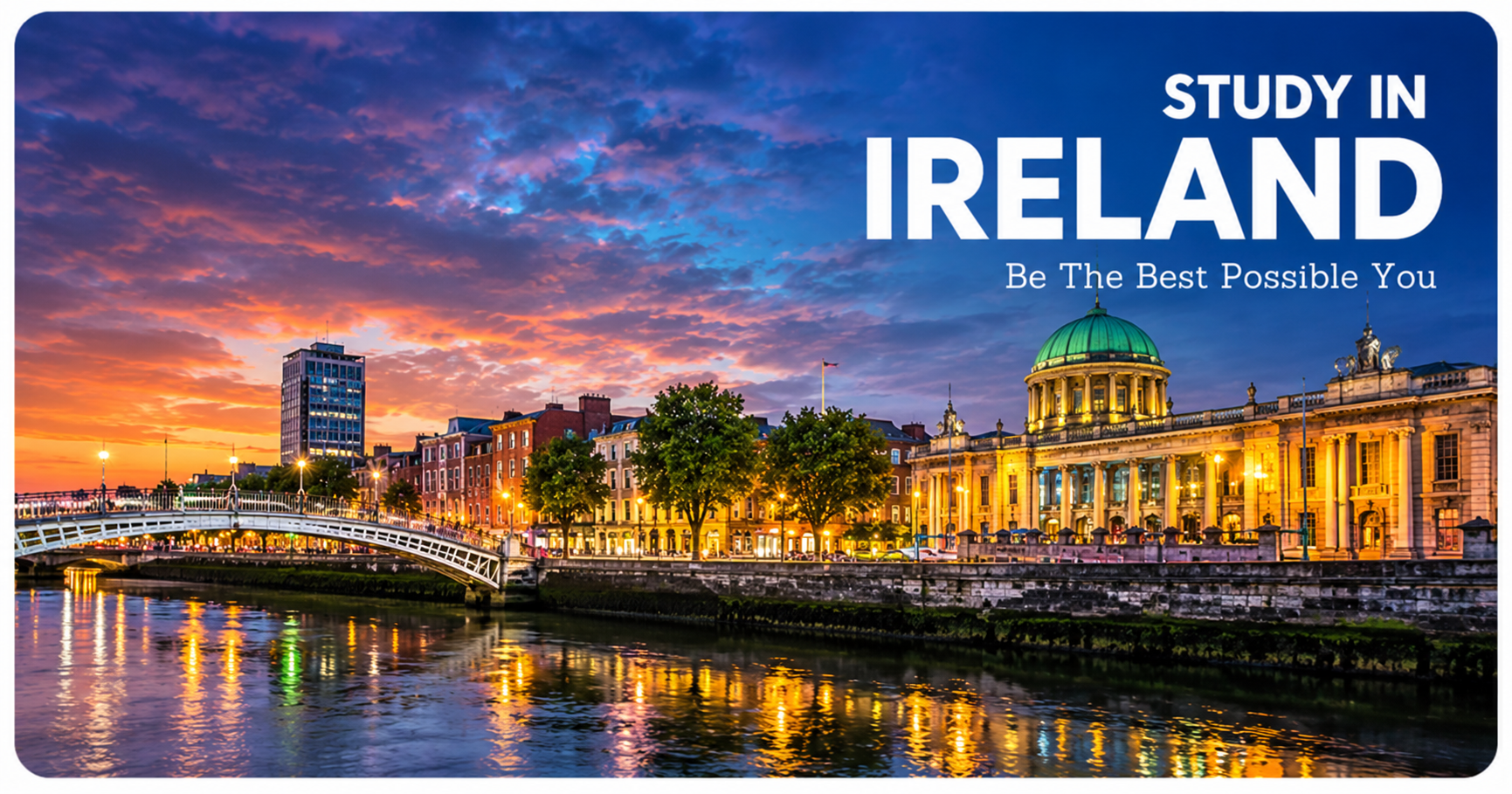
Studying in Ireland has become increasingly popular among international students seeking high-quality education, global career opportunities, and a welcoming environment. Ireland is home to world-renowned universities, a thriving economy, and the European headquarters of leading multinational companies, making it one of the best destinations for higher education.
One of the key reasons to study in Ireland is the quality and global recognition of its education system. Irish universities consistently rank among the world’s top institutions and offer industry-focused programs designed to meet the demands of today’s job market. Degrees earned in Ireland are internationally recognized and highly valued by employers worldwide.
Another major advantage is Ireland’s strong employment opportunities. Global companies such as Google, Microsoft, Meta, Apple, Intel, and LinkedIn have established their European headquarters in Ireland, creating excellent internship and career prospects for graduates.
Ireland also offers attractive post-study work opportunities through the Third Level Graduate Programme, allowing international students to remain in the country after graduation and gain valuable professional experience.
In addition, Ireland is known for its safe, friendly, and multicultural environment. International students enjoy a high quality of life, modern campus facilities, vibrant cities, and a welcoming community that supports both academic and personal growth.
The country’s strategic location within Europe also provides students with easy access to travel, networking opportunities, and exposure to diverse cultures and industries.
Overall, Ireland offers an exceptional combination of academic excellence, career development, innovation, and quality of life, making it one of the most attractive study destinations for international students worldwide.
Business and Management programs in the UK focus on leadership, strategy, and real-world business practices. Courses like MBA, International Business, Finance, and Marketing are designed with strong industry links, preparing students for global corporate careers and entrepreneurship.
Business and Management programs in the UK focus on leadership, strategy, and real-world business practices. Courses like MBA, International Business, Finance, and Marketing are designed with strong industry links, preparing students for global corporate careers and entrepreneurship.
Business and Management programs in the UK focus on leadership, strategy, and real-world business practices. Courses like MBA, International Business, Finance, and Marketing are designed with strong industry links, preparing students for global corporate careers and entrepreneurship.
Business and Management programs in the UK focus on leadership, strategy, and real-world business practices. Courses like MBA, International Business, Finance, and Marketing are designed with strong industry links, preparing students for global corporate careers and entrepreneurship.
Business and Management programs in the UK focus on leadership, strategy, and real-world business practices. Courses like MBA, International Business, Finance, and Marketing are designed with strong industry links, preparing students for global corporate careers and entrepreneurship.
Business and Management programs in the UK focus on leadership, strategy, and real-world business practices. Courses like MBA, International Business, Finance, and Marketing are designed with strong industry links, preparing students for global corporate careers and entrepreneurship.
Business and Management programs in the UK focus on leadership, strategy, and real-world business practices. Courses like MBA, International Business, Finance, and Marketing are designed with strong industry links, preparing students for global corporate careers and entrepreneurship.
Business and Management programs in the UK focus on leadership, strategy, and real-world business practices. Courses like MBA, International Business, Finance, and Marketing are designed with strong industry links, preparing students for global corporate careers and entrepreneurship.
Business and Management programs in the UK focus on leadership, strategy, and real-world business practices. Courses like MBA, International Business, Finance, and Marketing are designed with strong industry links, preparing students for global corporate careers and entrepreneurship.
Business and Management programs in the UK focus on leadership, strategy, and real-world business practices. Courses like MBA, International Business, Finance, and Marketing are designed with strong industry links, preparing students for global corporate careers and entrepreneurship.
International students in Ireland are allowed to work up to 20 hours per week during academic sessions and up to 40 hours per week during official holidays and semester breaks. Part-time jobs help students gain practical work experience, improve employability skills, build professional networks, and manage living expenses while studying.
Ireland offers the Third Level Graduate Programme, which allows eligible international students to remain in Ireland after completing their studies and gain valuable work experience. Graduates with a Bachelor's degree can stay for up to 1 year, while graduates with a Master's or PhD degree may stay for up to 2 years. This pathway provides access to Ireland's thriving job market and can lead to long-term employment opportunities.
The student visa process is a crucial step for international students planning to study in the United Kingdom. Below is a clear and structured overview of the UK Student Visa, post-study work options, and pathways to permanent residence.
Once you receive an offer letter from a IRELAND university, you can begin your IRELAND Student Visa application. The key requirements include:
The Graduate Route Visa allows international students to remain in the IRELAND after completing their studies to gain work experience
International students who wish to settle in the UK long-term can work toward Indefinite Leave to Remain (ILR).
After arriving at the Australia airport, you could be expected to be subjected to random enquiry of Border Force Officers who ask you simple questions.
After arriving at the Australia airport, you could be expected to be subjected to random enquiry of Border Force Officers who ask you simple questions.
After arriving at the Australia airport, you could be expected to be subjected to random enquiry of Border Force Officers who ask you simple questions.
After arriving at the Australia airport, you could be expected to be subjected to random enquiry of Border Force Officers who ask you simple questions.
After arriving at the Australia airport, you could be expected to be subjected to random enquiry of Border Force Officers who ask you simple questions.
After arriving at the Australia airport, you could be expected to be subjected to random enquiry of Border Force Officers who ask you simple questions.


Fill out the form and we’ll contact you soon.
Fill out the form and we’ll contact you soon.
Fill out the form and we’ll contact you soon.
Fill out the form and we’ll contact you soon.
Fill out the form and we’ll contact you soon.
WhatsApp us